





ECA Blueprint for Electrification
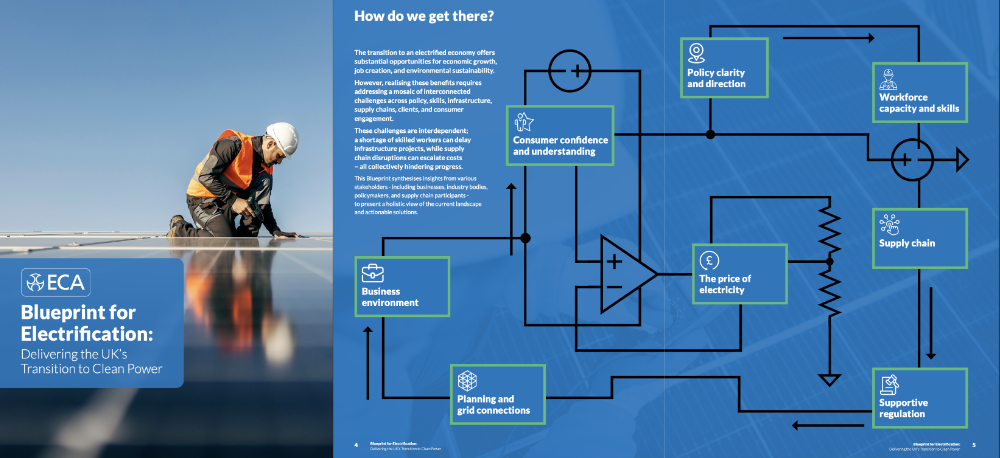
On 29 April 2025 the Electrical Contractors Association (ECA) published its "Blueprint for Electrification: Delivering the UK’s Transition to Clean Power".
Steve Bratt the Group Chief Executive Officer of the Electrical Contractors’ Association highlights that despite 'ambition, delivery is falling behind', and that the 'transition to electrification is complex... shaped by a mosaic of interconnected challenges – a shortage of competent, qualified electricians risks slowing deployment; an unstable business environment impacts supply chains; lack of consumer confidence and planning constraints hinder investment - each challenge reinforcing the next.'
The Blueprint rightly notes that much of the ambition for electrification will be in effect delivered by electrical engineers and electricians and as such it presents "...a comprehensive, practical roadmap for electrification through the lens of those who will deliver much of it: electricians... From upgrading the grid and expanding renewable generation to rolling out EV charge points and smart energy systems, electricians are at the heart of delivery. If we want electrification to succeed, we must involve the electrotechnical industry and confront the practical barriers slowing progress and take decisive action to remove them."
Electricians are the most trusted advisers in the UK when it comes to clean energy technologies like solar panels, heat pumps, and electric vehicle chargers, according to new YouGov polling commissioned by ECA (Electrical Contractors’ Association), in collaboration with electrical certification body Certsure.
The findings in the Blueprint for Electrification show:
- Almost a quarter (24%) of UK adults say they would trust a qualified electrician more than any other source – including authorities – to advise on which clean technologies to choose.
- There is particularly high trust amongst the youngest respondents (18-24: 35%).
- It is strongest in the East Midlands (28%) and Northern Ireland (30%).
- Government agencies, such as Ofgem, are the second-most trusted at 18%, with the strongest trust among slightly older respondents (45-54: 21%) and social grade ABC1 (20%).
The report runs through the issues heading by heading and recommendation by recommendation: The value of electricians, the consumer perspective and why an acceleration to electrification is needed. How electrification can be carried out, from policy clarity and direction to workforce capacity and skills. From supply chain changes to supportive regulation, electricity pricing, planning and grid connections. As well as the importance of supporting a fairer business environment, helping build consumer confidence and better understanding of the issues for consumers.
To turn ambition into action ECA’s Blueprint outlines ten recommendations for the UK government, calling for electricians to be placed at the heart of net zero strategies to accelerate electrification in homes, businesses, and communities. The ten recommendations are outlined below for for full details and descriptions download the full report here.
- Deliver long-term policy certainty
- Establish a cross- government
- Reform skills and apprenticeship pathways
- Tackle the electrical workforce shortage
- Secure critical supply chains
- Align and simplify regulations
- Reform electricity pricing
- Accelerate planning and grid connection reform
- Strengthen the business environment for electrification
- Improve consumer awareness and confidence
Elements of this article appear on the ECA news and blog site as 'Electricians revealed as UK’s most trusted source for green home advice, new ECA report finds' whilst quotations are taken from the full report 'Blueprint for Electrification: Delivering the UK’s Transition to Clean Power ' both dated 29 April, 2025
[edit] Related articles on Designing Buildings
- 600 million investment for 60,000 more skilled construction workers announced.
- A zero-carbon UK by 2050?
- Carbon.
- Carbon capture and storage.
- ECA progress on Welsh Recharging Electrical Skills Charter.
- Electrical and energy industry calls for urgent reform of electricity levies.
- Electricity.
- Electrification.
- Energy balancing.
- Energy supply.
- Energy white paper.
- Net zero and green jobs.
- Net zero carbon 2050.
- Power generation.
- Renewable energy.
Featured articles
Check out some of the best features and news from Designing Buildings as well as key stories from around the web.

Government launches a one stop shop for flood preparedness.

Sir Edwin Lutyens: Britain's greatest architect? Book review.

CIOB publishes free template to help assess and manage risks.
ECA's reflections on Party Conference season

Burnham wants to be confident of winning before asking for a fresh mandate.
New Chief Construction and Scientific Adviser

Sergio Cavalaro, Professor of Infrastructure Systems at Loughborough University.
Building safety levy for England

CIAT publish estimator tool for members.

Water sector faces a growing crisis that could slow the delivery of vital infrastructure.
Undervaluing our industrial past

Heritage value changes as taste for building styles changes.
Changing expectations around competence and compliance

New information sheet from CIAT.
Grenfell investigation files passed to CPS

Angela Rayner apologises on behalf of the British state.

Electrical contractors need to understand the practical implications.

The real barrier to getting more value from digital technology.